


Breathalyzer Refusal: What Are the Consequences?
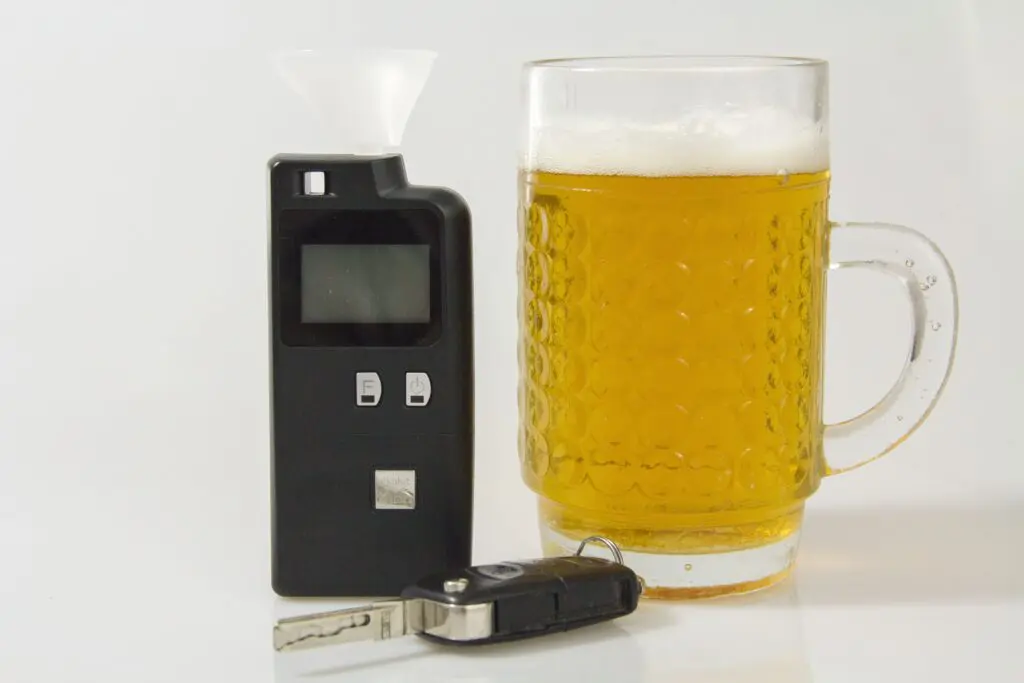
A lot of people think refusing the breathalyzer is the safe play. No test, no evidence, no problem. That reasoning sounds logical in the moment — usually at the side of the road or in the back of a squad car — but it misses some critical pieces of how Illinois law actually works.
Here’s the reality: refusing a breathalyzer in Illinois triggers its own set of consequences, separate from any DUI charge. And in several ways, those consequences are worse than if you had just taken the test.
There Are Actually Two Different Tests — and Different Rules Apply to Each
This is something most drivers don’t know until it’s too late, and it matters a great deal.
The first test is the roadside breath test — sometimes called a Preliminary Breath Test or PBT. An officer might ask you to blow into a small handheld device before placing you under arrest. You are not legally required to take this test. Refusing it carries no automatic license penalty. The results from a PBT can only be used to establish probable cause for an arrest — they are not admissible as evidence at trial.
The second test is the evidentiary breath test — administered at the police station after you’ve been arrested. This is the test that Illinois implied consent law actually governs. This is the one where refusing has real consequences.
Most people who say they “refused the breathalyzer” are talking about the station test. That’s the refusal that triggers a statutory summary suspension of your driver’s license.
You Already Agreed to This — When You Got Your License
Illinois operates under an implied consent law (625 ILCS 5/11-501.1). What that means, practically speaking, is that by obtaining an Illinois driver’s license and driving on Illinois roads, you’ve already given your consent to chemical testing if you’re lawfully arrested for DUI.
You don’t sign anything at the time of the stop. There’s no form to review. The consent was given when you got your license. So, when an officer asks you to submit to chemical testing after a DUI arrest, the law treats that as a request to honor an agreement you already made.
Refusing that request doesn’t void the agreement — it just means you’re facing the penalty for breaking it.
What Happens Immediately After You Refuse?
When you refuse the evidentiary breath test at the station, the officer will serve you with a Notice of Statutory Summary Suspension. Your driver’s license is confiscated on the spot.
You’ll receive a paper permit that allows you to drive for 45 days. After those 45 days are up, your suspension begins — automatically, unless you’ve taken legal steps to challenge it. That 45-day window is not much time. If you’re going to do anything about the suspension, you need to move quickly.
The Suspension Is Longer Than If You Had Taken the Test
This is the part that surprises most people. If you’re a first-time offender and you took the evidentiary breath test — and failed it — your statutory summary suspension is six months. If you refused, that suspension jumps to one full year. If you have a prior DUI arrest within the past five years, a refusal triggers a three-year suspension.
The logic behind this is straightforward from the state’s perspective: refusing is treated as an aggravating factor. You were given an opportunity to cooperate with a lawful request, and you didn’t.
The Monitor Device Driving Permit
In Illinois, first-time DUI offenders are eligible for something called a Monitoring Device Driving Permit — an MDDP. This permit allows you to continue driving during your statutory summary suspension, as long as you install a Breath Alcohol Ignition Interlock Device (BAIID) in your vehicle.
With an MDDP, you can drive to work, run errands, take your kids to school — essentially anywhere, at any time. The BAIID device requires you to blow before the car will start and does periodic checks while driving.
The Refusal Can Be Used Against You in Court
Here’s something else that often catches people off guard: refusing the breath test doesn’t make the DUI case go away. You can still be charged and prosecuted for DUI without a BAC result.
Illinois prosecutors can present evidence of the refusal at trial. They’re allowed to argue — and often do — that you refused because you knew you were over the limit. The judge or jury can draw their own conclusions from that.
Meanwhile, prosecutors will also rely on everything else from the stop: the officer’s observations, field sobriety test results (if any were performed), dashcam or bodycam footage, and witness accounts. A refusal removes BAC evidence, but it doesn’t remove the case.
You Can Challenge the Suspension — but the Clock Is Running
A statutory summary suspension is not set in stone. You have the right to challenge it by filing a Petition to Rescind the Statutory Summary Suspension in court.
The window to request a hearing is 90 days from the date of your arrest. Miss that deadline, and the suspension stands for its full duration.
Grounds for rescinding a summary suspension include:
- The officer lacked reasonable grounds to believe you were driving under the influence
- The arrest itself was not lawful
- The chemical test was not properly explained to you
- Other procedural issues with how the stop or arrest was handled
These aren’t easy arguments to make on your own. An attorney who handles DUI cases knows what to look for and how to present those arguments effectively. Given that a full year without a license is on the line, it’s worth having someone in your corner who does this regularly.
If You Already Refused, Here’s What to Do
Don’t assume the outcome is already decided. You have options — but they require action quickly.
A few things to focus on right away:
- Note the date of your arrest. You have 90 days from that date to request a hearing on the statutory summary suspension.
- Do not wait until your 45-day driving permit expires to contact an attorney. By then, the window for challenging the suspension may already be closing.
- Understand that the suspension and the DUI charge are two separate legal matters. Both need to be addressed — and they often require different strategies.
At The Traffic Defense Firm, we handle DUI cases and license suspension challenges throughout DuPage County, Cook County, Will County, and Kane County. We work on a flat-fee basis, so you know exactly what representation costs before we start.
Contact Us
If you refused a breathalyzer in Illinois and you’re not sure what comes next, contact The Traffic Defense Firm today. The decisions you make in the next few weeks will have a direct impact on how this situation resolves — and we can help you make the right ones. Call us at 773-657-4427 or contact us here for a free consultation.