


What Is a Monitoring Device Driving Permit (MDDP) and Who Qualifies?
Most people hear “ignition interlock” after a DUI arrest and assume it means they are not really suspended. That is not quite right. In Illinois, a Monitoring Device Driving Permit — usually called an MDDP — can let an eligible driver keep driving during a statutory summary suspension. But it is not available to everyone, and it comes with rules that can turn a license problem into something much more serious if you ignore them.
An MDDP is a monitored driving permit issued by the Illinois Secretary of State under 625 ILCS 5/6-206.1. If you qualify and comply, it can keep you on the road. If you do not comply, it can extend your suspension, cancel your permit, or expose you to new charges.
What an MDDP Actually Does
An MDDP allows you to drive during a statutory summary suspension after a DUI arrest, as long as you drive only vehicles equipped with a Breath Alcohol Ignition Interlock Device, or BAIID. The key phrase is “statutory summary suspension.” That is the license suspension triggered by failing or refusing chemical testing after a DUI arrest under 625 ILCS 5/11-501.1. It is separate from the criminal DUI case and moves on its own Secretary of State track. The suspension generally takes effect on the 46th day after notice is given. That short window matters. If you want to keep driving legally, you need to address the MDDP process before the suspension starts — not after you are already stuck.
The MDDP Is Not Just a Work Permit
One thing clients often misunderstand is what the permit allows. An MDDP is not limited to work, school, medical appointments, or certain hours. Illinois law says a person issued an MDDP may drive for any purpose and at any time, subject to the Secretary of State’s rules. But that freedom comes with one major condition: you must drive only a vehicle equipped with a BAIID, unless a specific exemption applies. Driving a vehicle without the device while you are required to use one is where people get into real trouble.
Who Qualifies for an MDDP in Illinois?
To qualify, you generally need to be classified as a “first offender” for MDDP purposes. That phrase is more technical than it sounds. Under 625 ILCS 5/11-500, first-offender status usually means you have not had a DUI conviction, DUI court supervision, or statutory summary suspension within the relevant five-year period before the current offense. The timing and outcome of any prior case matter.
You also generally must:
- Be at least 18 years old
- Have a valid driver’s license aside from the current summary suspension
- Be facing a statutory summary suspension related to the DUI arrest
- Install a BAIID within the required timeframe after the permit is issued
- Follow all Secretary of State monitoring rules
Who Does Not Qualify?
You generally cannot receive an MDDP if your driver’s license is otherwise invalid, if the DUI arrest involved death or great bodily harm to another person, if you were previously convicted of reckless homicide or aggravated DUI involving death, or if you are under 18.
There is also an important CDL issue. The Illinois Secretary of State says a CDL holder who is otherwise a first-time offender may be able to apply for an MDDP to drive a noncommercial vehicle. But an MDDP does not let you operate a commercial motor vehicle.
How the BAIID Requirement Works
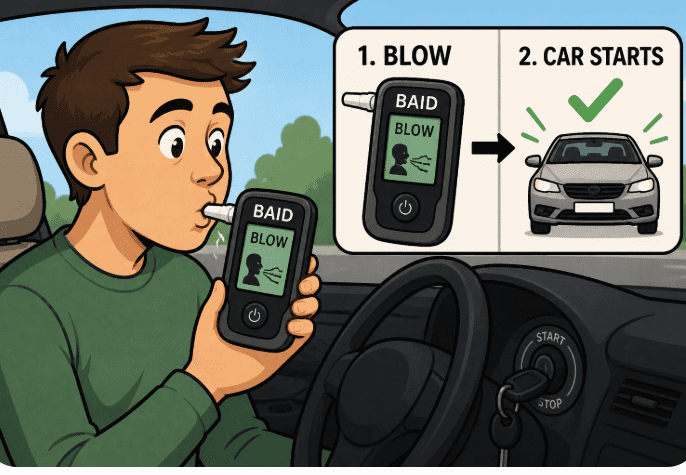
A BAIID is an ignition interlock device installed in the vehicle. Before the vehicle starts, you blow into the device. The Illinois Secretary of State explains that the vehicle will not start if the breath sample registers a BAC of .025 or more, and Illinois requires a camera unit to capture the driver during the test.
The Secretary of State receives monitoring information from the device, so missed tests, failed tests, tampering concerns, and other issues do not just disappear. If someone else drives your vehicle and creates a BAIID problem, it can still become your problem.
The Application, Deadline, and Cost
After the summary suspension notice is mailed, the Secretary of State sends information about the MDDP program. You receive an application, complete it, and send it back.
Once the MDDP is issued, the ignition interlock device must be installed within 14 days. If the Secretary of State does not receive notice that the device was installed, the MDDP can be canceled.
The Secretary of State lists average BAIID costs that may vary by vendor, including about $85 for installation, about $80 per month for BAIID rental, and a $30 monthly monitoring fee paid to the Secretary of State before receiving the MDDP. Some vendor fees may be waived if you are declared economically challenged.
Employer Vehicles Are a Narrow Exception
Illinois allows a possible employer-vehicle exemption, but it is narrow. You may be able to drive an employer-owned vehicle without a BAIID during work hours if the Secretary of State approves it and the vehicle is not specifically assigned to you.
The exemption generally does not apply if you are self-employed, work for a family-owned business, take the vehicle home, use it personally, drive a school bus or school vehicle, or drive a vehicle designed to transport more than 15 passengers. Even when approved, use is capped at no more than 12 hours per day and 6 days per week.
What Happens If You Violate the Rules?
Violations can have real consequences.
The Secretary of State can extend the summary suspension for an additional 3 months if it determines that an MDDP violation occurred. Multiple violations can mean multiple extensions. The Secretary of State also warns that BAIID problems can lead to cancellation of the MDDP. Three extensions may result in vehicle impoundment. Four extensions may result in seizure or forfeiture. If you choose not to participate in the BAIID program and are caught driving during the suspension, or if you participate but drive a vehicle without the BAIID when one is required, the Secretary of State warns that you are guilty of a Class 4 felony.
An MDDP Does Not Replace Fighting the Suspension
An MDDP is often useful, but it is not the same thing as winning a petition to rescind the statutory summary suspension.
If there are legal grounds to challenge the suspension, your attorney may still file a petition to rescind. The goal is always the same: protect your ability to drive while also protecting the DUI case itself. Sometimes that means pursuing an MDDP. Sometimes it means fighting the suspension aggressively. Often, it means doing both strategically.
Talk to an Illinois DUI Lawyer Before the Clock Runs Out
If you were arrested for DUI and received notice of a statutory summary suspension, do not wait until the suspension starts to figure out whether you qualify for an MDDP. The application, BAIID installation, court deadlines, and suspension challenge all move quickly.
At The Traffic Defense Firm, we represent those charged with DUI throughout DuPage County, Cook County, Will County, and Kane County. We work on a flat-fee basis, so you know exactly what representation costs before we start. Call us at (773) 657-4427 or contact us here for a free consultation.